Showing posts with label cold winter morning. Show all posts

Monday, 13 July 2020

Tips for better landscape photography

I love landscape photography, especially when it is not sunny and bright outside, I believe weather conditions that we have here give us an endless opportunity to capture the beauty of the countryside/landscapes we have. Here are a few tips to improve your landscape photography.

Tip 1:
Photograph sunsets:
* metre for reflective foreground, such as the water; this will record the sunset and the foreground correctly
* use the ND (Neutral Density) filter

Reflections on the canal

Mountain reflection in the lake - Lake District

Tip 2:
Choose the right time of day:
* understand and see your light
* find a suitable viewpoint
* wait for right lighting conditions, light can make a huge difference in your final shot
* photograph in golden light
* photograph landscapes early morning

Photograph taken in Wales in the evening

Early morning, Loch Lamond, Scotland 

Golden light on bridge - Reading
Tip 3:
Weather conditions:
* capture atmospheric shots - take photographs in bad weather, capture rainy day shots, fog
* capture raindrops on tree branches, spider webs etc
* take a spot reading from a mid-tone from your scene

Early morning mist
Dew drop on the branch

Rain on grass reed

Snowy day, view from start of the Iron Bridge - Telford
 Tip 4:
Photograph seascape in all weather conditions:
* capture sky and reflections
* shoot dark stormy skies to create mood and atmosphere

Sunset behind the mountains

After the sunset over the beach - Lake District

Before the rain - Leicester
Tip 5:
Show scale in your photographs
* include in your photograph a human, tree, house to show scale
* use a long focal lens
* use a tripod for long exposures and in low light conditions

The tall tree - France

Walk in the park - Wakehurst Place

The red taxi - Bangkok 
Tip 6:
Exclude the sky:
* create dramatic, colourful images by excluding the sky
* concentrate on colour
* photograph reflections in the water, be creative
* photograph during the summer's hazy light to add character to your images
* exclude sky on dull days, shoot detail, patterns in the fields

Stormy day - Lands End, Cornwall

Carpet of Tulips - Keukenhof , Amsterdam 

Bubbles - Eden Project, Cornwall
Tip 7:
Photograph winter landscapes
* sun in the winter has a warm hue, giving it the 'golden light', which adds mood to the photograph
* photograph trees covered with snow, frost or rain drops
* shoot looking up at the trees
* shoot in wide angle and zoom in
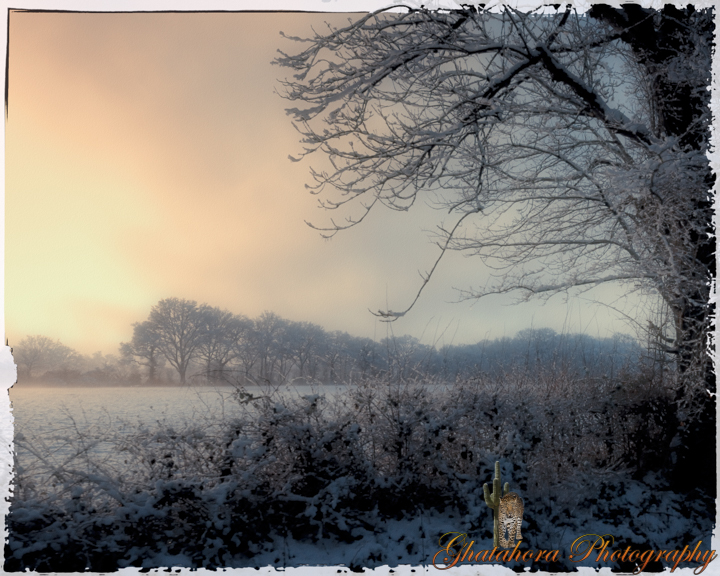

Snow - Near Bishopswood Golf Course, Baughurst

Tall trees - Pamber Forest

Snow in the trees - Tadley
Tip 8:
Leading lines:
* include paths, lines leading into the image, it creates perspective and adds sense of distance & depth
* use a wide angle lens

Micheldever Woods, Basingstoke
Dinas Head - Cornwall
Tip 9:
Include foreground interest:
* use wide angle lens
* include foreground interest to create a sense of distance
* shoot from low angle to emphasize the sky
* photo white clouds and dramatic stormy clouds

Seaside - Northumberland 


Textures - Northumberland
Tip 10:
Use slow or fast shutter speed:
* capture movement in water or to freeze the waves
* on bright sunny days use filters to have a slow shutter speed
* cloudy/shade is perfect lighting conditions to photograph movement in water


Waves - Cornwall

Bradgate Park - Charnwood Forest, Leicestershire

Bhupinder Ghatahora ABIPP, ARPS, ASWPP
Ghatahora Photography
info@ghatahora.co.uk
www.ghatahora.co.uk
Twitter
Pinterest
Instagram
Flickr
Facebook


Monday, 27 April 2020

Learn how take photographs at anytime

Morning & Night Photography


Photography during winter is fun, especially when the mornings are filled with mist and the light is golden. There are long shadows during sunset and frost throughout the day, beautifully formed on spider webs, plants and anything that touches the chill. Then there is snow, which creates its own unique atmosphere. But most importantly, the whole ambiance is a wonderland.

Even though it gets cold during these months, don’t let this put you off photography. Wear suitable clothing to keep warm and capture the beauty of nature in your photography.

In this article I will briefly explain how to take great photographs in different lighting conditions using the ISO, aperture, shutter, and manual mode of your camera.

Morning Photography

Before sunrise, the light reflected from the sky hitting the scene is very soft and diffused, which gives very weak shadows. The colour of the sky will be blue on a clear day and grey on a cloudy day, such lighting conditions can create very atmospheric photographs. This photograph was taken before the sunrise.


Use the Aperture Priority mode; set the aperture at f16 (the camera will automatically adjust the shutter speed).

For Manual mode, set the aperture at f16 and the shutter speed at 15 seconds. Use this shutter speed as a guide only, as your exposure time may vary depending on the available light. You may either have to increase or decrease the shutter speed depending on the image produced.

Cameras which do not have the Aperture Priority or Manual mode will often allow selecting different scene settings, such as ‘dusk/dawn’, ‘nightlight’ or ‘sunset’ modes. Please choose which suits you and your camera best.

Here is a photograph taken using Aperture Mode. The exposure will be long, so use a tripod as this will avoid camera shake. In this photograph the sun has just began to rise and you can see how the colours are different in both images.


If you don't have a SLR, it's still possible to get good photographs, just need to understand your camera and its modes. Read more on 'Understanding your Camera'. 
Example of photograph using ‘Dawn/dusk’ mode on a compact camera

During the morning also try to photograph the morning fog, water droplets on spiderwebs and frost. The photographs below are all taken with a compact camera. To get maximum depth of field, set your compact camera on 'Landscape Mode' (set f16 on SLR - using Aperture mode ) and for minimum depth of field set the camera on 'Close-up Mode' (set f2.8 of f5.6 on SLR - using Aperture mode). The result of using these settings will be similar.
Morning fog (camera set on 'Fog Mode')


Dew drops (camera set on 'Close-up Mode')


Night Photography

During total darkness, there is obviously no natural light available. These are perfect conditions to photograph trailing lights from cars, lit cityscapes, fireworks and light movement. 

If using Shutter mode, set your SLR on a slow shutter speeds such as 1/8th, 1/4th to capture movement. If using Manual mode, set the camera at f16 and use the camera’s exposure indicator to set the value on 0 as this will give you the correct exposure.

An exposure indicator is visible through the viewfinder which looks like:

2||||1||||0||||1||||2+.
On compact cameras choose 'Nightlight', and the camera will adjust the aperture and shutter accordingly.

Photograph of snow at night using Manual Mode:


It's great to experiment and be creative with photography. Try changing the ISO to 1600 or higher to minimise camera shake and to achieve moody, atmospheric photographs. I also convert my images to black/white to add more drama to it.


On compact cameras choose ‘Nightlight’ and the camera will adjust aperture and shutter speed accordingly.


Example of photograph using ‘Nightlight’ on a compact camera:


Bhupinder Ghatahora ABIPP, ARPS, ASWPP
Ghatahora Photography
info@ghatahora.co.uk
Facebook

Wednesday, 28 March 2018

Photo Story - Cold Winter Morning

This month's photo story is morning walk on a clod foggy morning.

Bench in the fog

Red van

Walking the dog

Man in the mist
Bhupinder Ghatahora
Ghatahora Photography
info@ghatahora.co.uk
www.ghatahora.co.uk
@Ghatahora
Facebook
Pinterest
Flickr
Instagram