Monday, 6 March 2017

Easy ways to Understand Apertures

What is Aperture?

Aperture is one of the three main functions in photography along with the shutter and the ISO.

The aperture is a ‘circular hole’ within the lens and is known as the ‘diaphragm’. To create an image, light passes through the ‘diaphragm’ and travels into the camera image sensor/film creating the image. The amount the ‘diaphragm’ is open to allow light through is measured in f-stops, i.e. f2.8, f4, f5.6, f11, f16, etc.

Beginners often get confused on what ‘f’ numbers mean and how they work. As a general rule: the smaller the ‘f’ number, the larger the opening of the aperture. The larger ‘f’ number, the smaller the opening of the aperture.

Therefore, f2.8 is considered as a large aperture. At f2.8 the diaphragm of the lens is larger and allows more light to come through and fall on the image sensor/film.

At f16, the aperture is small. The diaphragm of the lens is small limiting the amount of light passing through the lens and falling on the image sensor/film.

The below diagram shows the aperture in relation to its ‘f’ numbers: (not to scale)


 How does the aperture work?

Just think about the human eye; the pupil controls the amount of light passing further into the eye by shrinking or expanding.

The aperture works exactly the same way. The amount of light is controlled by changing the f-stops on the camera. As you can see from the diagram, f2.8 allows much more light in than f32.

If the aperture is changed from one ‘f’ stop ‘either way’, it doubles or halves the size of aperture as well as the amount of light passing through.

Moving from f2.8 to f4 the amount of light is halved.


Moving from f8 to f5.6the amount of light is doubled.


When changing the aperture either way, it also affects the shutter speed (the amount of time the shutter is open) and the ‘Depth of Field’- (DOF is what controls the image sharpness).


Aperture and Focus

Choosing a large ‘f’ number such as f22 or f32 will bring all the foreground and background in focus. This aperture setting is always best to use when you want everything to be sharp and in focus.

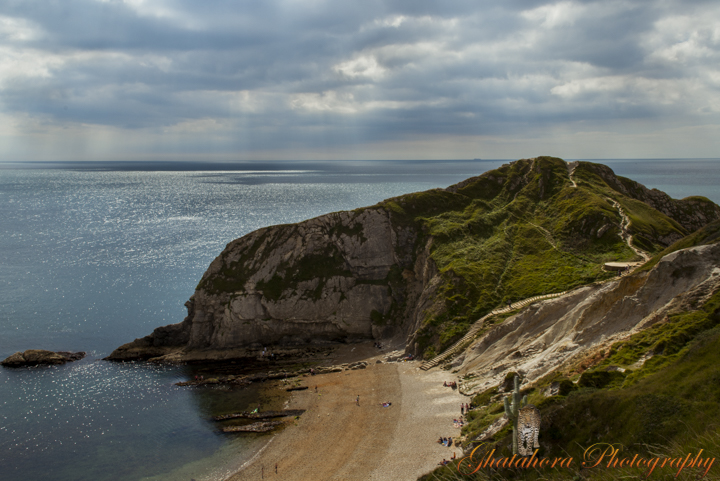
This photograph has been taken using f22, as you can see everything is in focus from the foreground to the background.


On the other hand, a small ‘f’ numbers such as f2.8, f4 and f5.6 will blur the background, isolating the subject. This aperture setting is useful to use when you want to have parts of your photograph blurred to add impact as well as for photographing close-ups.

The 1st photograph has been taken using f2.8, as you can see the purple nail varnish bottle is in focus and the rest of the image is blurred. The 2nd photograph has been taken on f5.6.


For cameras that do not have aperture mode, use  ‘Landscape’ mode  for a large DOF.


And for a small DOF use the  ‘Close-up’ or the  ‘Portrait’ mode.


The aperture adds dimension to the photograph by either blurring the background or keeping everything in focus.


Bhupinder Ghatahora
Ghatahora Photography


Friday, 3 March 2017

What does the 'running person' symbol stand for on your camera

The running person symbol stands for Sports mode, which is all about speed. Your camera will automatically choose the fastest shutter speed to capture the fast moving subject.

In some cameras, the camera will enable continuous high-speed shooting; which means it will take photographs one after another continually. Use this mode to capture fast moving subjects or any kind of sport.


Bhupinder Ghatahora
Ghatahora Photography

Monday, 27 February 2017

Wedding offer expiring tomorrow

Book you wedding and get 20% off any wedding package

Offer ends 28th February 2017


Ghatahora Photography specialises in wedding photography for all cultures, book for wedding photography for 2017/2018.

Basic package starts from £550: includes 5 hours of photography and selected images available on a memory stick which are printable to size 9"x6.


Email me on info@ghatahora.co.uk to discuss your wedding needs.

Book now to get this fantastic offer. Call for a free friendly consultation.

Areas covered, Reading, Newbury and Basingstoke.

Book you wedding and get 20% off any wedding package

Offer ends 28th February 2017


Bhupinder Ghatahora
Ghatahora Photography

Image of the month

Reflections
Scotland


Bhupinder Ghatahora
Ghatahora Photography

Friday, 24 February 2017

What is the 'mountain & cloud' symbol on your camera

The mountain & cloud symbol stands for Landscape mode. Using this mode your camera will select the smallest aperture to maximise depth-of-field.

Your image will be sharp both in the foreground and in the background. As the name suggests, use this mode to take landscape photographs.

Sea view

Bhupinder Ghatahora
Ghatahora Photography

Friday, 17 February 2017

The face symbol on your camera

The face symbol stands for Portrait mode. The camera selects the widest aperture setting
to minimise depth-of-field in order to blur the background.

Always remember to focus on your subject’s eyes for sharper portraits. In this setting, the flash will automatically activate the ‘red-eye’ reduction setting.

Colourful hair

Bhupinder Ghatahora
Ghatahora Photography

Monday, 13 February 2017

Wedding Packages

Book you wedding and get 20% off any wedding package

Offer ends 28th February 2017


Ghatahora Photography specialises in wedding photography for all cultures, book for wedding photography for 2017/2018.

Basic package starts from £550: includes 5 hours of photography and selected images available on a memory stick which are printable to size 9"x6.


Email me on info@ghatahora.co.uk to discuss your wedding needs.

Book now to get this fantastic offer. Call for a free friendly consultation.

Areas covered, Reading, Newbury and Basingstoke.

Book you wedding and get 20% off any wedding package

Offer ends 28th February 2017

Bhupinder Ghatahora
Ghatahora Photography